How to choose your first padel racket
21 June 2026
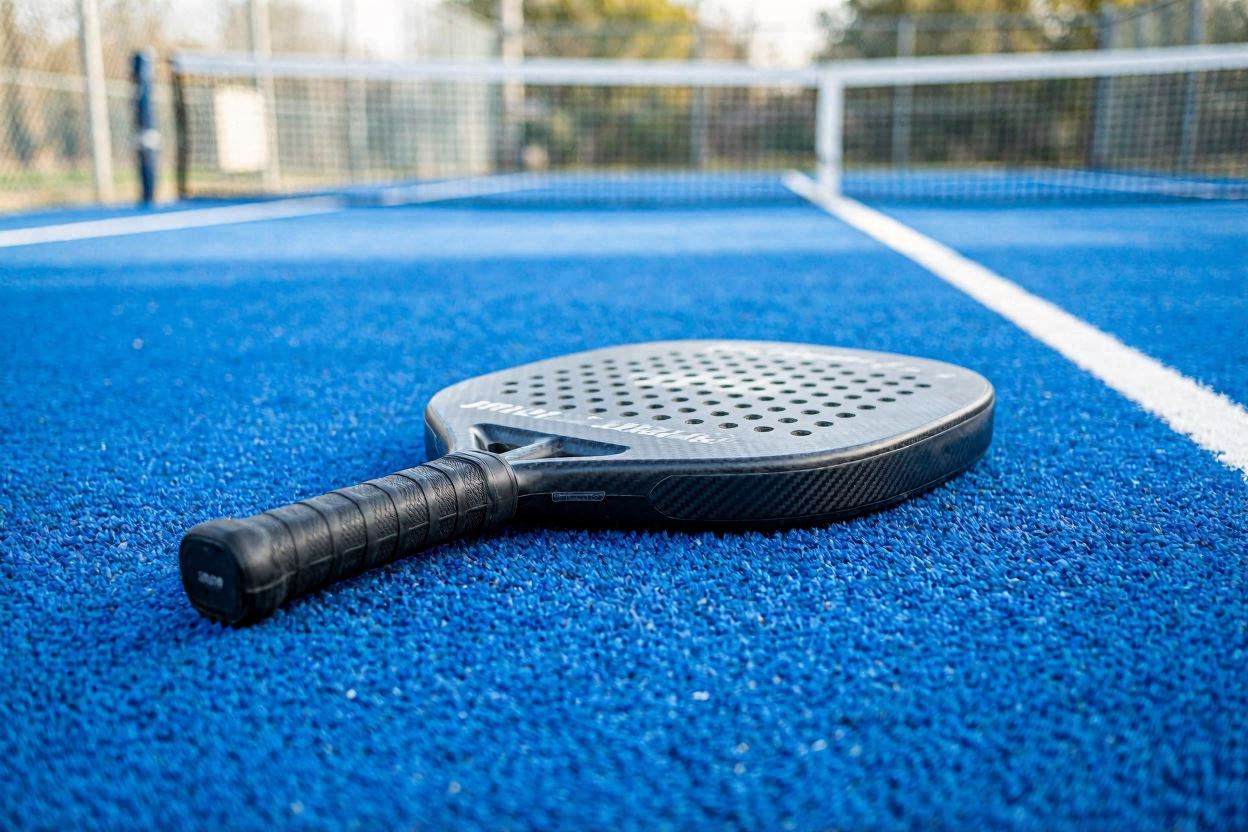
Buying your first padel racket can feel overwhelming - there are hundreds of models and every one of them claims to be the best. Here’s what actually matters.
Shape: round, teardrop, or diamond
- Round - the largest sweet spot and the most control, making it the easiest to play with. Best for beginners.
- Teardrop - a good middle ground between control and power, suited to players who’ve been at it for a while.
- Diamond - the most power but the smallest sweet spot, requiring solid technique. For more advanced players.
As a beginner, you should almost always pick a round racket. It forgives off-center hits and helps you build consistency before you start chasing power.
Weight
Most rackets weigh between 350-375 grams. A lighter racket is easier on your arm and quicker to maneuver during fast exchanges at the net, while a heavier racket gives you more power but demands more from your arm and shoulder.
If you’re unsure, pick something around 360-365 grams - a good balance for most beginners.
Balance
Balance determines where the racket’s weight is concentrated:
- Low balance - weight closer to the handle, giving better control and easier handling on the arm.
- High balance - weight closer to the top, giving more power but making the racket harder to handle and raising the risk of tennis elbow if your technique isn’t there yet.
Beginners should almost always choose low or medium balance.
Core hardness
Softer cores (often EVA foam) give better control and are gentler on the arm. Harder cores give more power but demand better technique and put more strain on the arm. As a beginner: choose a soft or medium-soft core.
Example: Beginner padel racket
Placeholder for a future affiliate link to a racket. Swap in once you have an approved partner program.
Beginner summary
Look for a racket that’s round, weighs around 360 grams, has low to medium balance, and a soft core. That combination prioritizes control and injury prevention over power - exactly what you need before your technique catches up.